


By Jake Peras
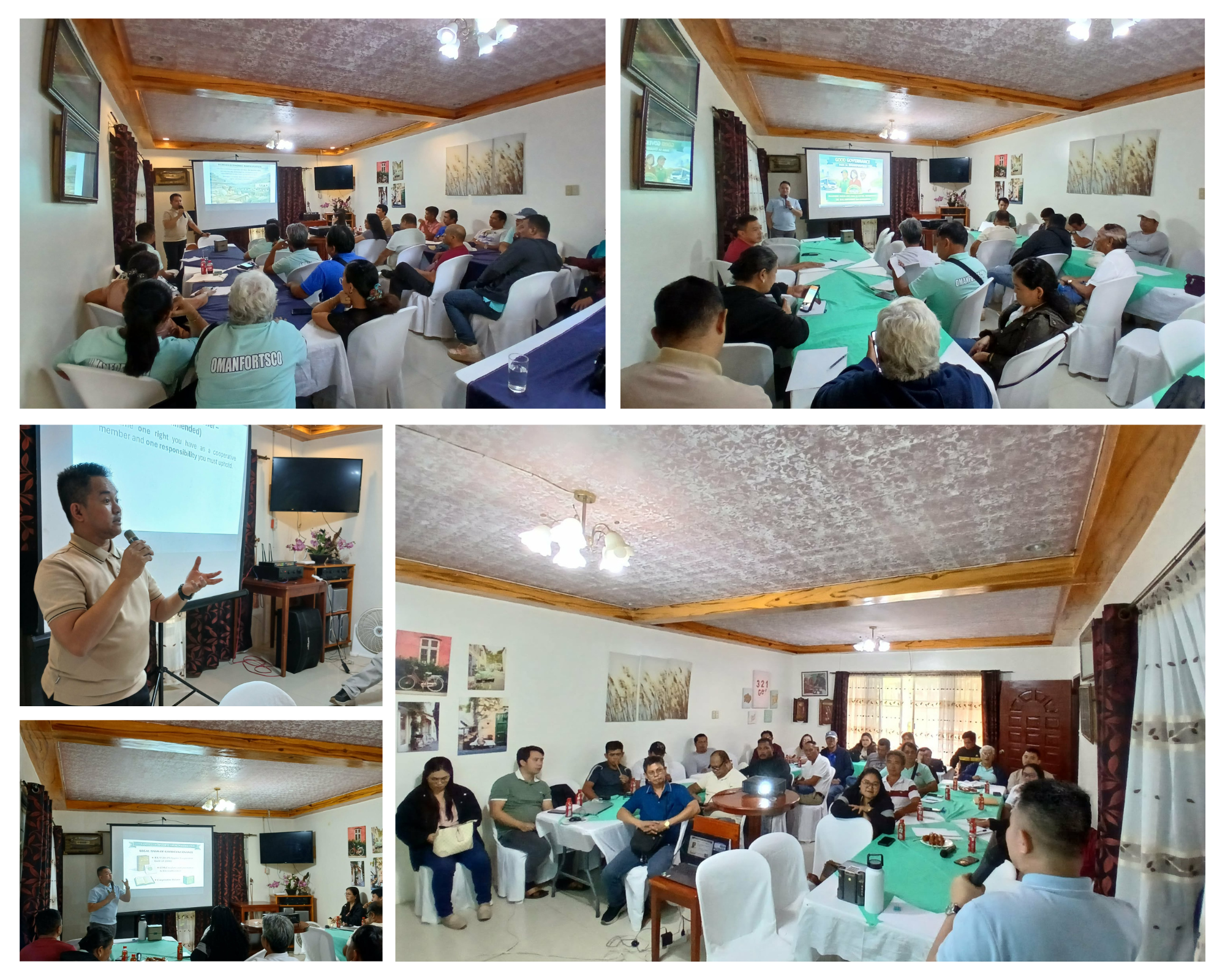
Cooperatives are not merely business entities. They are institutions of collective empowerment, designed to uplift their members through shared ownership, democratic governance, and economic solidarity. Recently, I had the privilege of conducting a comprehensive training on the Fundamentals of Cooperatives and Cooperative Governance and Management for the officers and members of the One Manolo Fortich Transport Service Cooperative (OMANFORTSCO)—a vital transport cooperative serving the community of Manolo Fortich, Bukidnon.
This training formed part of the Cooperative Development Authority’s (CDA) mandatory capacity-building framework and was designed to strengthen both institutional understanding and governance competence among cooperative leaders and members.
Reaffirming the Cooperative Identity
The training began by grounding participants in the fundamentals of cooperatives and their purpose. As defined under Republic Act 9520, a cooperative is an autonomous association of persons who voluntarily unite to meet their economic, social, and cultural needs through a jointly owned and democratically controlled enterprise.
This definition is not merely legal; it reflects a philosophical commitment to human-centered development. Unlike traditional corporations, cooperatives exist primarily to serve their members, not external investors. They are designed to generate shared benefits, enhance economic security, and promote collective advancement.
Participants examined how cooperatives contribute to:
- Economic stability through dividends and patronage refunds
- Livelihood security and access to financial services
- Social cohesion and mutual support
- Community-based economic development
These discussions were contextualized within the transport sector, where cooperatives play a crucial role in providing reliable mobility while ensuring fair and equitable income distribution among drivers and operator-members.
Understanding Governance: The Backbone of Cooperative Sustainability
A major focus of the training was cooperative governance. Governance is not merely administrative; it is the structural mechanism that ensures transparency, accountability, and responsible stewardship of cooperative resources.
The session emphasized the legally mandated governance structure consisting of:
- The General Assembly, as the highest policy-making authority
- The Board of Directors, responsible for strategic direction and policy formulation
- The Management Team, tasked with implementing policies and managing day-to-day operations
- Oversight committees, including Audit and Election Committees, that ensure internal accountability
Participants explored the principle of separation of powers—a critical safeguard against abuse, mismanagement, and governance failures. When properly implemented, this structure ensures that authority is balanced, decisions are transparent, and leaders remain accountable to members.
Addressing Real Governance Challenges in Transport Cooperatives
Transport cooperatives operate in complex and highly operational environments. During the training, participants examined common governance challenges that undermine cooperative effectiveness, including:
- Lack of transparency in boundary and income computations
- Weak financial controls and poor record-keeping
- Concentration of decision-making authority among a few individuals
- Limited member participation in General Assembly meetings
- Confusion regarding roles and responsibilities
These issues are not merely administrative—they directly affect member trust, operational efficiency, and institutional sustainability.
Through structured discussions and case-based learning, participants gained clarity on governance best practices, particularly the core pillars of:
- Transparency
- Accountability
- Participation
- Rule of law
These pillars form the ethical and operational foundation of any sustainable cooperative.
Governance as Stewardship: Beyond Compliance Toward Institutional Excellence
One of the most important messages emphasized during the training was that governance is not simply about compliance—it is about stewardship.
Stewardship requires leaders to recognize that cooperative resources are not personal assets, but collective property entrusted to them by the membership. It demands discipline, ethical conduct, and unwavering commitment to the cooperative’s mission.
Participants were encouraged to view governance not as a bureaucratic requirement but as a strategic function essential to:
- Protecting member interests
- Ensuring financial sustainability
- Strengthening institutional legitimacy
- Building long-term organizational resilience
For transport cooperatives such as OMANFORTSCO, good governance directly influences operational stability, financial performance, and member confidence.
Empowering Cooperative Leaders Through Knowledge and Capacity Building
Capacity building is the cornerstone of cooperative development. Even the strongest organizational structures can fail without informed and capable leaders.
This training equipped OMANFORTSCO officers and members with the conceptual clarity and practical tools necessary to fulfill their roles responsibly. Participants gained a deeper appreciation of their individual responsibilities not merely as operators or officers but as stewards of a collective enterprise.
More importantly, the training fostered a renewed sense of purpose: the understanding that the cooperative exists not only to generate income but also to improve its members’ lives and contribute to community development.
Commitment to Cooperative Empowerment and Institutional Strengthening
As a Certified Training Provider of the Cooperative Development Authority and an Extension Project Leader at Bukidnon State University, I am committed to strengthening cooperative institutions through education, governance reform, and capacity building.
Cooperatives remain one of the most powerful mechanisms for inclusive economic development, particularly in rural and underserved communities. However, their success depends fundamentally on leadership competence, governance integrity, and member participation.
The engagement with OMANFORTSCO reflects a shared commitment to institutional strengthening and cooperative excellence. By investing in governance education today, cooperatives lay the foundation for long-term sustainability and meaningful impact.
Moving Forward
The future of cooperatives depends not on external support alone but on the internal strength of their governance systems and the integrity of their leadership.
Training initiatives such as this serve as catalysts—equipping cooperative leaders with the knowledge, discipline, and perspective required to steward their institutions responsibly.
OMANFORTSCO’s willingness to invest in governance capacity is a promising indicator of its commitment to institutional maturity and sustainable growth.
Strong cooperatives are not built overnight. They are built through education, accountability, and shared commitment.
And that process begins with knowledge.
No responses yet