


Remembering the Soul of Service
In a dusty barangay gymnasium tucked between cornfields and coconut groves, I once stood across from an elderly farmer who insisted I take the last piece of rice cake on the table. “Kaon, Sir. Parehas ra ta og gibati sa kalibutan,” she said with a gentle smile. “Eat, Sir. We carry the same worries of the world”. It was then that I realized this work—extension, empowerment, community development—was not about reaching down. It was about reaching across.
In community-based work, particularly among agrarian reform cooperatives, I’ve learned that what binds us is not policy, strategy, or even service delivery—it’s kapwa. Not charity. Not outreach. Kapwa. A shared self. A recognition that there is no real divide between the helper and the helped.
Kapwa as a Cultural Foundation
Rooted in the Filipino psyche and articulated by Dr. Virgilio Enriquez, kapwa is more than camaraderie. It is a profound ethical stance—seeing the other not as separate but as part of oneself. In a culture shaped by colonial histories and fractured by socioeconomic divides, kapwa acts as a cultural bridge, rehumanizing relationships between the privileged and the poor, the educated and the underserved.
This ethic is echoed in everyday practices: bayanihan in times of crisis, pagtinabangay in Mindanao communities, and even in the unspoken gestures of respect between generations. It is in these small but powerful acts that the soul of Filipino community empowerment is found.
Co-Empowerment in Practice: The Field as Equalizer
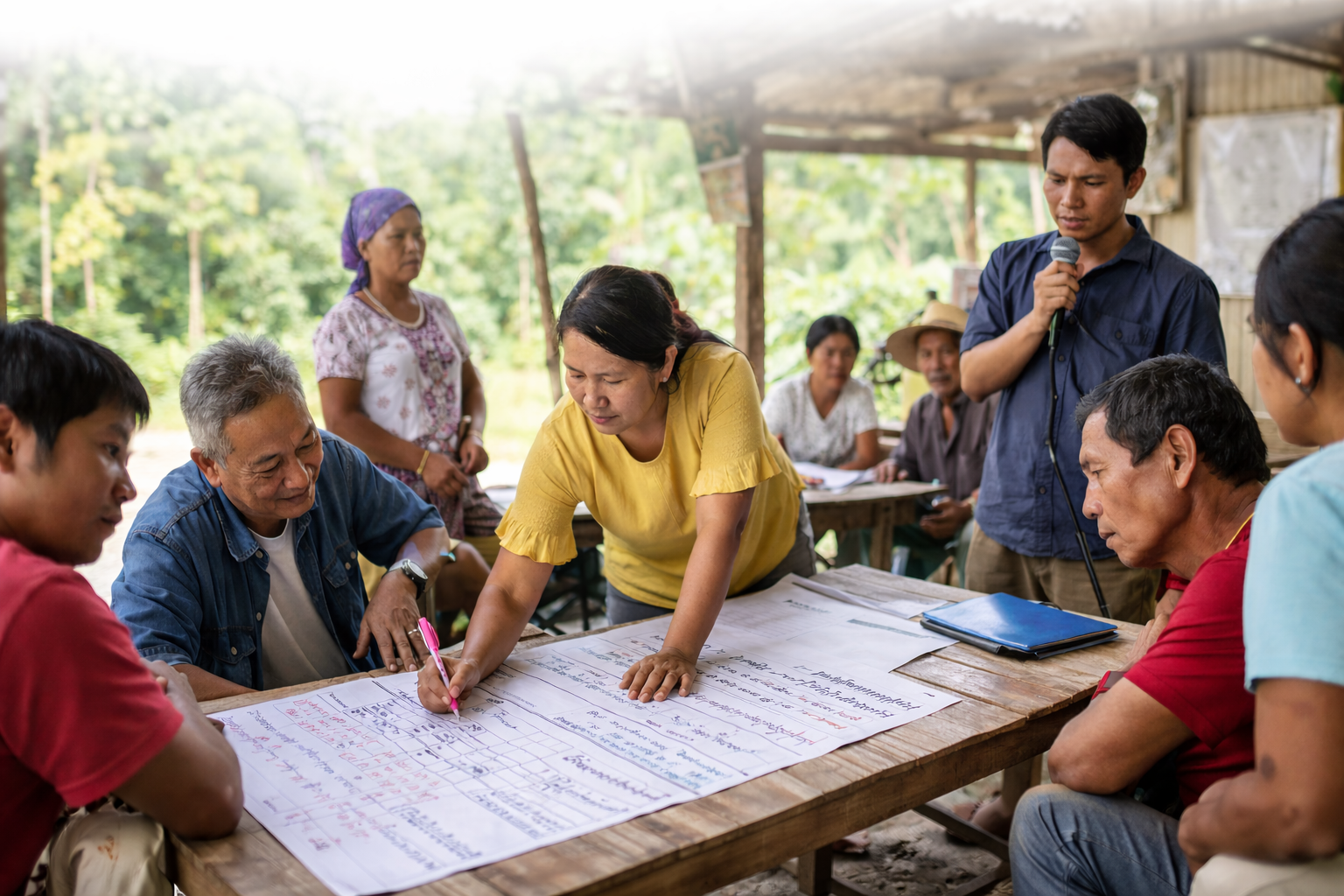
During one strategic planning workshop with a dairy cooperative, I asked members to visualize their ideal future. One member, a quiet woman in her 60s, raised her hand and said, “Gusto ra ko nga di na mi mahadlok muistorya sa general assembly.” (I just want us to stop being afraid to speak in the general assembly.)
That moment silenced the room and changed our session. The conversation turned not just to plans and projects, but to courage, confidence, and co-ownership. The tools we brought—frameworks, templates, metrics—were not the magic. The magic was in the relationships we built. I became a student as much as a facilitator. And in those field visits in rice mills, sari-sari stores, drying pavements, it was the community that taught me how to teach.
Breaking the Expert Myth
There is a myth in development work—that the “expert” enters a space to fix, to deliver, to transform. But true empowerment begins when we step back from our credentials and lean into kapwa. When cooperative members build their own financial literacy tools using their own language and examples, the impact is deeper and more durable.
I remember co-designing a break-even calculator with a young treasurer who said, “Sir, kabalo na mi mu-compute pero mas importante nga kami mismo ang naghimo ani.” (Sir, we now know how to compute, but what matters more is that we built this ourselves.)
The Quiet Power of Shared Humanity
Where kapwa thrives, dignity follows. I’ve seen leaders rise not because they had the degrees and the credentials, but because they had the community’s trust. I’ve seen women farmers draft bylaws not because they were trained lawyers or policymakers, but because they had something to express and someone finally listened.
Extension, in its truest form, is not transactional. It is relational. It is a weaving of stories, silences, and shared labor. It is governance shaped by conversation, strategy drawn on backboards, and futures mapped beside livestock pens.
Reclaiming the Heart of Development
If we are to build futures worth living, then we must abandon the illusion of separateness. Development must not only be data-driven, but dignity-driven. As educators, consultants, and facilitators, we are not called to uplift—we are called to walk with.
In the shade of mango trees, beside sacks of palay, inside cooperative halls, we discover that the most radical act of empowerment may be to recognize that no one arrives empty-handed, and no one leaves unchanged.
That is kapwa. And that is the future I choose to help build.
Republication Notice
This essay was originally published in Scholarly Lens, Dreamer Publishing Services. © Jake L. Peras. Reposted on this website for portfolio and educational purposes.
12 Responses
Good day
This is an excellent read. It is an eye-opener to every Filipino, wanting to extend a helping hand to others. May we always consider the well-being of others. May we always look after our ‘kapwa’.
Good day, Ma’am Janice. Thank you very much for taking the time to read and for your thoughtful message. I truly appreciate your affirmation. Indeed, kapwa reminds us that service and compassion are strongest when they are shared. May we continue to look after one another and choose to do good, even in simple ways. Thank you again for your support.
This is a good read Sir Jake. Thank you for sharing.
Thank you for your kind words! I’m grateful you read it, and I’m happy it resonated with you. More reflections and articles coming soon.
This is an insightful reflection of other-mindedness. Thank you for sharing.
Thank you so much for your thoughtful words. I truly appreciate you taking the time to read it. I’m glad the reflection on other-mindedness resonated with you. May we continue to live with empathy, shared responsibility, and genuine concern for others in the way we lead and serve.
This line got me teary-eyed..
“I’ve seen women farmers draft bylaws not because they were trained lawyers or policymakers, but because they had something to express and someone finally listened.”
And it’s true, it feels great when someone listens, it feels great to be heard.
Thank you for this, sir Jake. looking forward on reading such insightful stories in the future.
Thank you so much for sharing this. It truly means a lot to me. I’m deeply touched that those words moved you.
You’re absolutely right: being listened to and being heard is powerful, especially for people whose voices are often overlooked. That moment of recognition can restore dignity and strengthen hope.
Thank you for reading and for your kindness. I’ll continue writing stories that honor the quiet strength of our farmers and communities. I truly appreciate your support.
Only a rare few possess both the courage and compassion to give voice to the narratives of society’s deprived and marginalized sectors. This article lays bare the harsh realities faced by many farmers, while, importantly, offering a vision of hope—one that affirms that with principled intervention and a genuine commitment to others, their longstanding struggles can be heard, acknowledged, and meaningfully addressed.
Thank you very much for this deeply thoughtful and affirming message. I truly appreciate the way you captured both the pain and the hope that this piece sought to convey.
Our farmers have carried the weight of hardship for far too long, often in silence and without the recognition they deserve. If this article has helped bring their realities closer to the public conscience, then it has served its purpose.
I also share your belief that lasting change begins with principled action and a sincere commitment to others. When we choose to listen with humility and respond with integrity, we move beyond sympathy and toward justice.
Thank you again for reading and for standing with the narratives that must never be ignored.
Very informative and realistic article about extension project in a cooperative setting Sir Jake 👏🏻
Thank you very much for your kind words. I’m glad that the article resonated with you and reflected the realities of implementing extension projects in cooperative settings.
Extension work becomes meaningful when it responds to the actual needs of communities and strengthens the capacity of cooperatives to become sustainable and self-reliant. I appreciate your engagement and support — it encourages us to continue developing initiatives that create lasting social and economic impact.
Feel free to share your insights or experiences as well. Constructive dialogue helps improve and strengthen extension efforts.